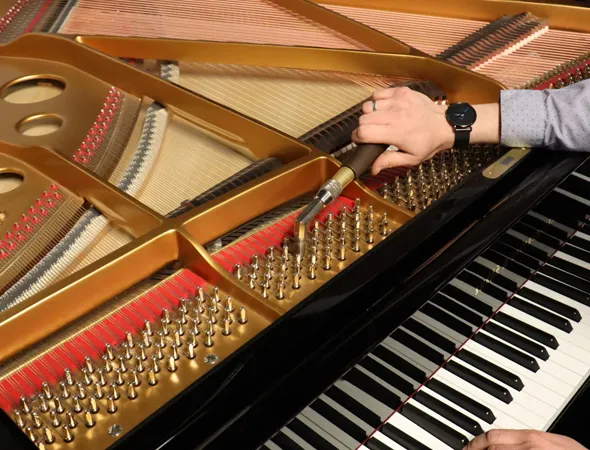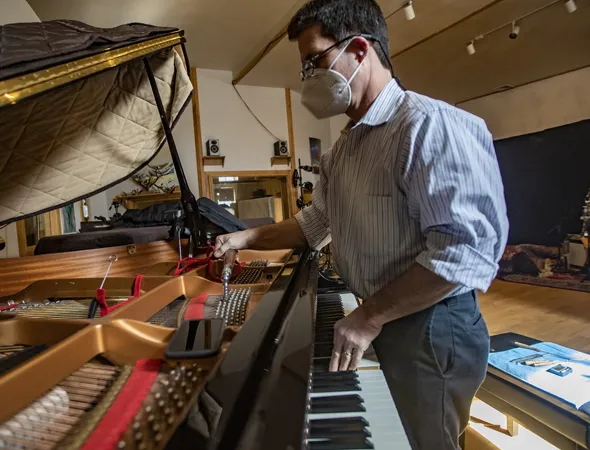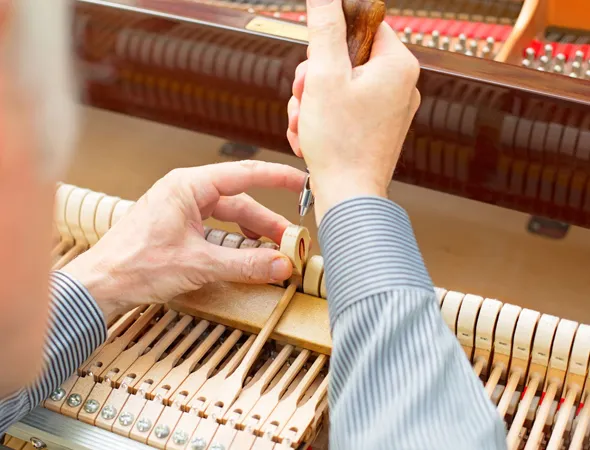

An older piano with worn parts, fading tone, or a tired finish can still have many years of music left in it. Randy Parsell Piano Tuning Service offers piano restoration services in Houston, TX that bring older and heirloom pianos back to reliable playing condition.
Get in touch
Piano restoration brings an older piano back to good playing condition by repairing or replacing parts that have worn out over time. The Piano Technicians Guild describes a range of work, from reconditioning, which cleans, repairs, and adjusts the piano with parts replaced only when needed, to rebuilding, which includes full disassembly and replacement of all worn parts. Restoration addresses these worn areas together instead of one repair at a time. With the right work, a piano can gain decades of extra life, as long as its frame is still sound.
At Randy Parsell Piano Tuning Service, we help Houston families, churches, and collectors decide how much restoration their piano truly needs. Every project starts with a detailed inspection and a plain-language explanation of what we find. You get honest guidance based on your piano’s quality, condition, and value to you, along with a clear quote before any work begins. Our goal is a piano that plays well, holds its tuning, and keeps the character that makes it special.
Services
Restoration is our most involved service, and it often works hand in hand with the others. Here is how each one supports an older or heirloom piano.
A restored piano with new strings needs several tunings as the wire stretches and settles. We set up a tuning plan after restoration so the piano reaches stable pitch and stays there. Consistent tuning also keeps the new strings and tuning pins working under even tension.

Not every older piano needs a full restoration. Sometimes a few targeted repairs, like new key bushings or a replaced hammer shank, are enough to get it playing well again. We always start by looking for the smallest fix that truly solves the problem.

Our restoration service ranges from reconditioning worn parts to complete rebuilding, cabinet refinishing, and careful work on antique and heirloom pianos. Each project begins with a full inspection and a clear plan. We match the work to your goals, whether that means playability or preserving a family treasure, and you know the scope and cost before we begin.

Older pianos often hide decades of dust, debris, and sometimes pest damage. Detailing is a smart first step before restoration, since a clean interior shows the true condition of the parts. It also makes a fine finishing touch once the work is done.
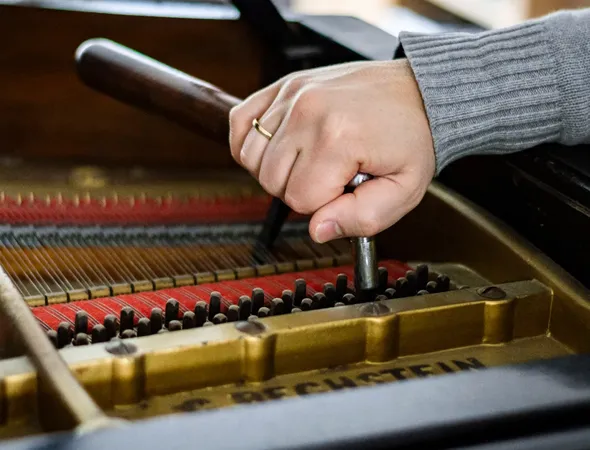
Bring Back a Full, Rich Tone: Replacing worn hammers, strings, and other parts helps an older piano recover the depth and warmth it has lost over the years.
Preserve Your Family’s History: Restoration lets you keep a meaningful family instrument in your home instead of replacing it with something new.
Add Decades to the Piano’s Life: Replacing worn parts on a piano with a sound frame can extend its playing life for many more years.
Stable, Dependable Tuning: Restoring the parts that hold tension, like strings and tuning pins, helps the piano stay in tune much longer between visits.
A Piano That Looks as Good as It Sounds: Cabinet work and refinishing return the piano’s appearance to a condition you are proud to show off.
Work Process
Full Inspection
We examine the strings, pinblock, soundboard, action, and cabinet to understand your piano's true condition.
Custom Restoration Plan
We explain what we found, outline your options, and provide a clear quote and timeline.
Restoration and Final Setup
We complete the agreed work, then tune, adjust, and play-test the piano before it goes back into regular use.
Piano strings lose tone and strength over the decades, and Houston’s humid air can speed up rust on older wire. Rusty or dull strings produce a thin, lifeless sound and are more likely to break during tuning. Restringing replaces the old strings, often along with new tuning pins, and can take 20 hours or more of careful work on an upright alone.
New bass strings are custom made to match your piano’s original design. Randy Parsell Piano Tuning Service evaluates your strings and explains whether a full restringing or a partial replacement makes more sense for your piano.
The soundboard is the large wooden panel that turns string vibrations into the full sound you hear. Over many years, it can crack, separate from its supporting ribs, or lose its slight upward curve, known as crown, which helps it project tone. Many small cracks are cosmetic, but loose ribs and lost crown often lead to buzzing and a weak, short tone.
The bridges, which carry vibrations from the strings to the soundboard, can also crack with age. We inspect both areas closely and recommend repairs, such as regluing ribs or filling cracks, or full replacement only when the piano truly needs it.
The pinblock is the layered hardwood block that holds a piano’s 220 to 240 tuning pins firmly in place. When it dries out or cracks with age, the pins lose their grip and the piano can no longer hold a tuning. A straight row of loose pins is often a sign of a crack that calls for a new pinblock.
Replacement means removing the strings and the cast iron plate, then fitting and drilling a new block at precise angles. Randy Parsell Piano Tuning Service tests pin tightness across the piano and tells you whether pinblock replacement is necessary for piano detailing or if a less involved fix will work.
The cost depends on how much work the piano needs and whether it is an upright or a grand. National estimates put action rebuilding at about $1,000 to $4,500 for an upright and $5,000 to $8,000 for a grand. Refinishing often adds $1,500 to $8,500, and restringing an upright in good condition can run around $2,000. We inspect the piano first and give you a detailed quote so there are no surprises.
Smaller reconditioning jobs take far less time, but full restoration projects often take two to five months. Restringing, soundboard work, and refinishing add the most time because each step needs care and time to settle or dry. Custom parts, like bass strings, may also need to be ordered. We give you a realistic timeline before any work begins.
Some reconditioning work can be done in your home, but major restoration usually needs a workshop. Restringing, pinblock replacement, soundboard work, and refinishing require space, special tools, and controlled conditions. Local piano moving typically costs about $150 to $550. We explain what can be done on-site and what needs to be moved before you commit.
A restored piano usually sounds fuller and more even than it did in its worn state. New hammers, strings, and adjustments can change its tone compared to how it sounded before the work. After the mechanical work is done, the hammers are voiced to shape the tone, so it can stay warm or become brighter based on your taste. We talk through the sound you want before we start.
Keep the piano in a room with stable humidity, ideally around 40% to 50%. In Houston, that often means steady air conditioning or a dehumidifier, and keeping the piano away from vents, windows, and exterior doors. New strings and parts settle during the first year, so plan for extra tunings early on. This simple care protects your investment and keeps the piano sounding its best.
If your piano no longer holds a tune, sounds tired, or looks worn, restoration may bring it back. Contact Randy Parsell Piano Tuning Service to schedule an inspection and talk through your options.
Phone: (713) 446-8406
Email: randyparsell@gmail.com
Send A Message
Randy Parsell Piano Tuning Service helps Houston piano owners give older and heirloom pianos a second life. Randy offers honest assessments and careful restoration work that respects each piano’s history and character. Call us to schedule your restoration inspection.
We offer piano restoration services to homes, churches, and schools in Houston and nearby communities. Every project begins with an inspection at your location, so you learn what your piano needs before deciding on next steps. We currently serve these areas: