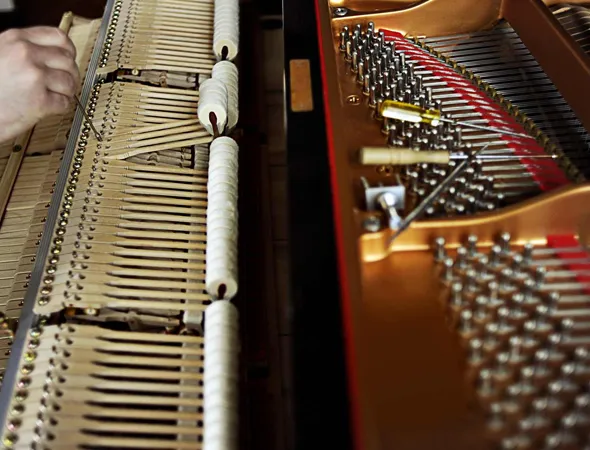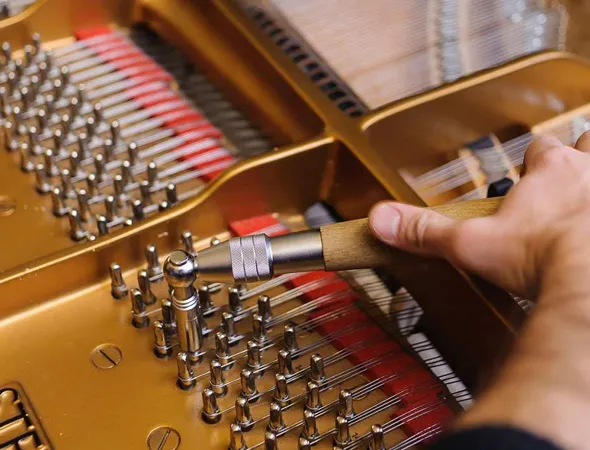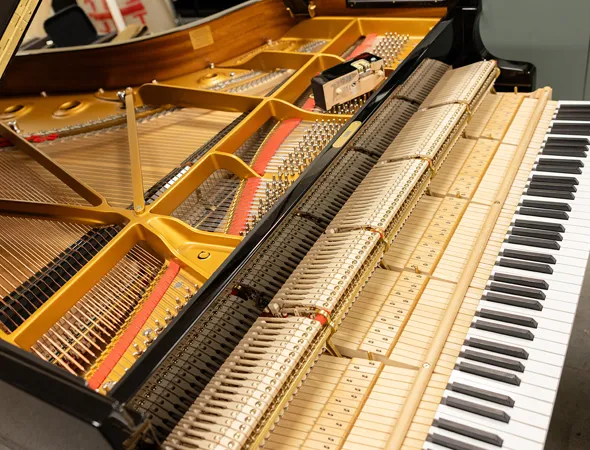

Sticky keys, silent notes, and squeaky pedals can make playing feel like a chore. Randy Parsell Piano Tuning Service finds the cause and repairs it properly, often without moving your piano out of your Houston home.
Get in touch
A modern piano has roughly 10,000 moving parts, and pressing a single key sets about 100 of them in motion. These parts are made of wood, felt, leather, and metal, and all of them wear, shift, and react to humidity over time. When one small part fails, you may notice a key that sticks, a note that will not play, or a buzz that was not there before. Piano repair means finding that exact part and fixing, adjusting, or replacing it so the piano plays evenly again.
Randy Parsell Piano Tuning Service repairs uprights, consoles, spinets, and grand pianos across Houston. We explain what is causing the problem in plain language, then give you a clear quote before any work begins. Many repairs can be completed right in your home during a single visit. You deal directly with the person doing the work, and we only recommend repairs your piano actually needs.
Services
Repair work often connects to the other care your piano needs. Here is how each of our services fits in when something is not working right.
After a repair, especially one that involves new strings, your piano may need a tuning to settle everything back to pitch. Regular tuning also keeps string tension steady, which lowers the chance of future breaks. We can handle the tuning in the same visit or as a follow-up.

Our repair service covers sticking keys, broken strings, noisy or loose pedals, cracked hammer shanks, and other worn action parts. In Houston's humid air, swollen felt bushings are one of the most common reasons keys stick. We find the exact part causing the problem instead of guessing, and most common repairs are finished in your home in one visit.

When a piano has many worn parts at once, fixing them one at a time can cost more over the years. Restoration handles those issues together as one planned project. We will tell you honestly when repairs make sense and when restoration is the better value.

Dust and debris in the keybed and action are a common cause of sticking keys and odd noises. Detailing removes that buildup and can sometimes solve a problem without replacing any parts. It also protects felts and bushings from extra wear.
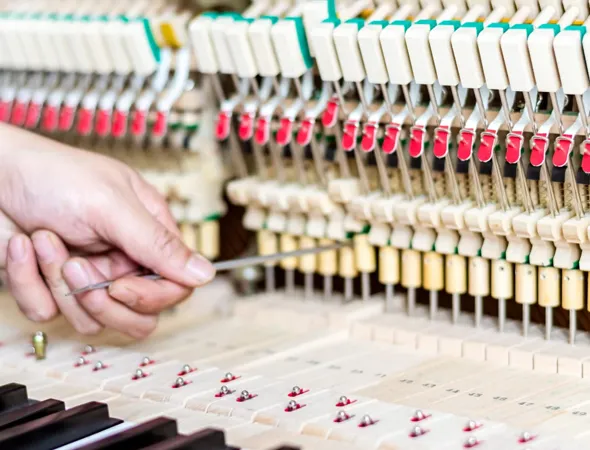
Every Key Plays as It Should: Fixing silent, sticking, or double-striking notes lets you play full pieces without working around problem keys.
Even, Responsive Touch: Repaired action parts help each key feel the same, giving you better control over soft and loud playing.
Small Problems Stay Small: Fixing one worn part early keeps it from putting strain on nearby parts and leading to more repairs.
Lower Long-Term Costs: Timely repairs usually cost far less than the larger reconditioning work a neglected piano may need later.
Repairs Without Moving Your Piano: Many common repairs are done right in your home, so you avoid the cost and risk of moving the instrument.
Work Process
Tell Us What You Notice
Call or email us and describe the problem, such as which keys, pedals, or sounds are affected.
Diagnose and Quote
We inspect the piano, find the cause, and give you a clear price before any work starts.
Repair and Test
We complete the repair, then play and test the piano to confirm everything works smoothly.
Over time, the felt and leather inside a piano’s action compress and wear, so the keys stop feeling even. You might notice that some keys feel heavier than others, notes that will not repeat quickly, or soft passages that are hard to control. Regulation is the process of adjusting the action’s many parts back to precise measurements so every key responds the same way.
Even a hammer that is out of position by about one millimeter can change the tone and touch of a note. Randy Parsell Piano Tuning Service evaluates your piano’s action and fine-tunes key height, hammer position, and other settings so the piano feels consistent from the lowest note to the highest.
Chipped, cracked, loose, or missing key tops are more than a cosmetic problem. Sharp edges can catch your fingers, and uneven surfaces make it harder to play smoothly. Older pianos often have ivory key tops, while newer ones use plastic, and each needs a different repair approach.
We reattach loose tops, repair chips, and replace worn key tops so your keyboard looks clean and feels comfortable to play. For pianos with ivory keys, we walk you through the available options before any work begins.
A buzz, rattle, or click when you play can come from many places, which makes it tricky to track down. Common causes include a loose screw in the action, a worn felt, an object resting on the soundboard, or a loose part in the cabinet.
Sometimes the noise is not coming from the piano at all, but from a lamp or picture frame vibrating nearby. We play through the keyboard, listen closely, and test each area until we find the exact source. Once we find it, we tighten, adjust, or replace the part so your piano sounds clean again.
Repair costs depend on the problem, the parts needed, and how long the work takes. Many piano technicians charge roughly $60 to $75 per hour plus parts, and replacing a single broken string often costs around $50. Larger jobs, like a full action regulation, can run several hundred dollars or more. We inspect your piano and give you a clear quote before any repair begins.
Yes, most common repairs are done right where your piano sits. Sticking keys, broken treble strings, pedal problems, and many action repairs can usually be fixed in one home visit. Larger projects, such as replacing a full set of hammers, may require taking parts to a workshop. We will tell you upfront if any part of the job needs to be done off-site.
You can usually keep playing, but it is best to avoid the affected note until it is repaired. The loose wire can rest against other strings and cause buzzing or wear. Strings often break because of rust or age, so nearby strings may also be weak. Having the piano checked soon helps prevent more breaks and gets the note working again.
It depends on the type of repair. New strings stretch as they settle, so they usually need to be brought back to pitch within a few weeks. Repairs to keys, pedals, or hammers typically do not affect the tuning. If your piano is also due for a tuning, we can often handle both in the same visit.
Gently pressing the key down and moving it slightly from side to side can sometimes loosen a swollen felt bushing. You can also look for visible objects stuck between the keys. Avoid forcing the key, spraying household lubricants, or using heat tools, because these can damage the felt and wood. If the key still sticks or several keys are affected, it is time to call a technician.
Most piano problems get worse with time, not better. Contact Randy Parsell Piano Tuning Service to schedule a repair visit and get your piano playing smoothly again.
Phone: (713) 446-8406
Email: randyparsell@gmail.com
Send A Message
Randy Parsell Piano Tuning Service helps Houston piano owners fix the problems that get in the way of playing, from sticky keys to broken strings. Randy explains every repair clearly and works carefully to keep your piano playing smoothly. Call (713) 446-8406 to schedule your piano repair visit.
We provide piano repair throughout Houston and several nearby communities. Most repairs are handled on-site, so you can get your piano working again without scheduling a mover. If you notice a problem, give us a call and we will set up a visit in your area: